
By Matthew Piecora, AKA, EZBOT
This article grew out of a one-hour phone call with some of the leaders at Elektron and conversations with developers working on alternative firmware. I wanted to understand the excitement around these projects, the intentions behind them, and the possible consequences for the people making and using the instruments.
I went into the call unsure of what to expect. I had always thought of Elektron’s Swedish development team as fairly private, but both developers were eager to discuss the subject and smiled throughout our conversation. They had helped create some of Elektron’s most iconic instruments. They spoke about their roots in punk and hacking culture, their appreciation for coding as a creative practice, and the development of the Sidstation. They recalled how it began as a hacking project and helped establish Elektron as an instrument maker.
I know people at Elektron and care about them as humans and artists, so hearing their perspective mattered to me. My account of the call and follow-up reflects my understanding of those conversations, rather than an official company statement.
The excitement among musicians is easy to understand. Granular synthesis on a Model:Cycles, polyphony on an original Digitakt, or MIDI effects controlled by the Octatrack crossfader are compelling ideas. Getting new possibilities from an instrument you already own can inspire music you might not otherwise have made.
I also wanted to experience some of those changes myself. I tried alternative firmware on my original Digitakt and enjoyed several additions. The Digitakt II had already replaced it in my setup; for the way I work, it is a much more capable instrument. With the original no longer being manufactured and no longer part of my regular workflow, I felt comfortable using it to explore.
Playing a sample polyphonically on one track was cool. A single-cycle waveform became a playable synth voice, and it was easy to hear the musical appeal.
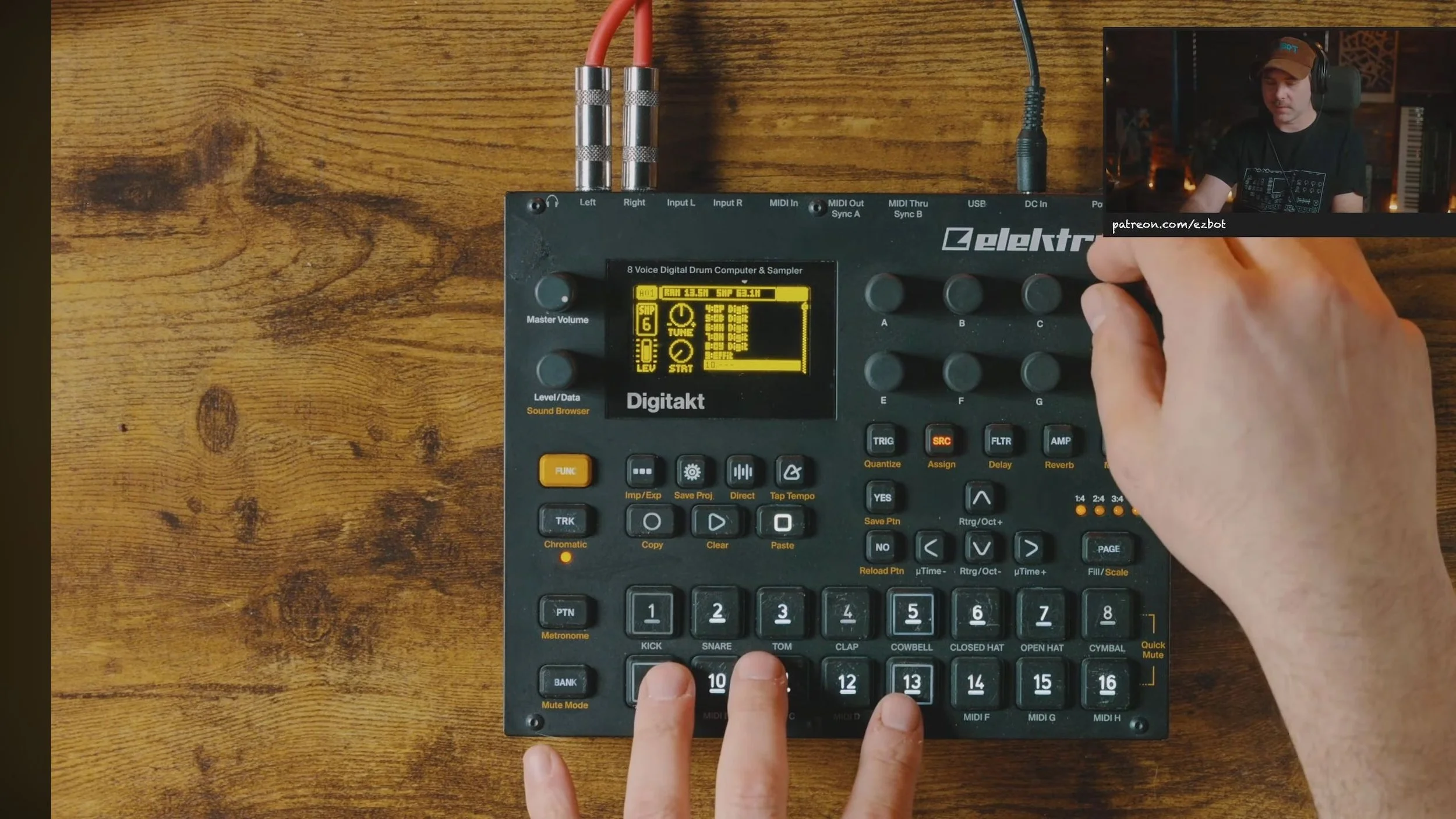
I also liked the added master EQ, honestly it was my favorite feature I saw offered. This was something I would love to see in all Elektron boxes if it’s not too heavy on the CPU. Watching the curve change as I adjusted it made the effect easy to understand, and the interface looked at home on the Digitakt’s screen.
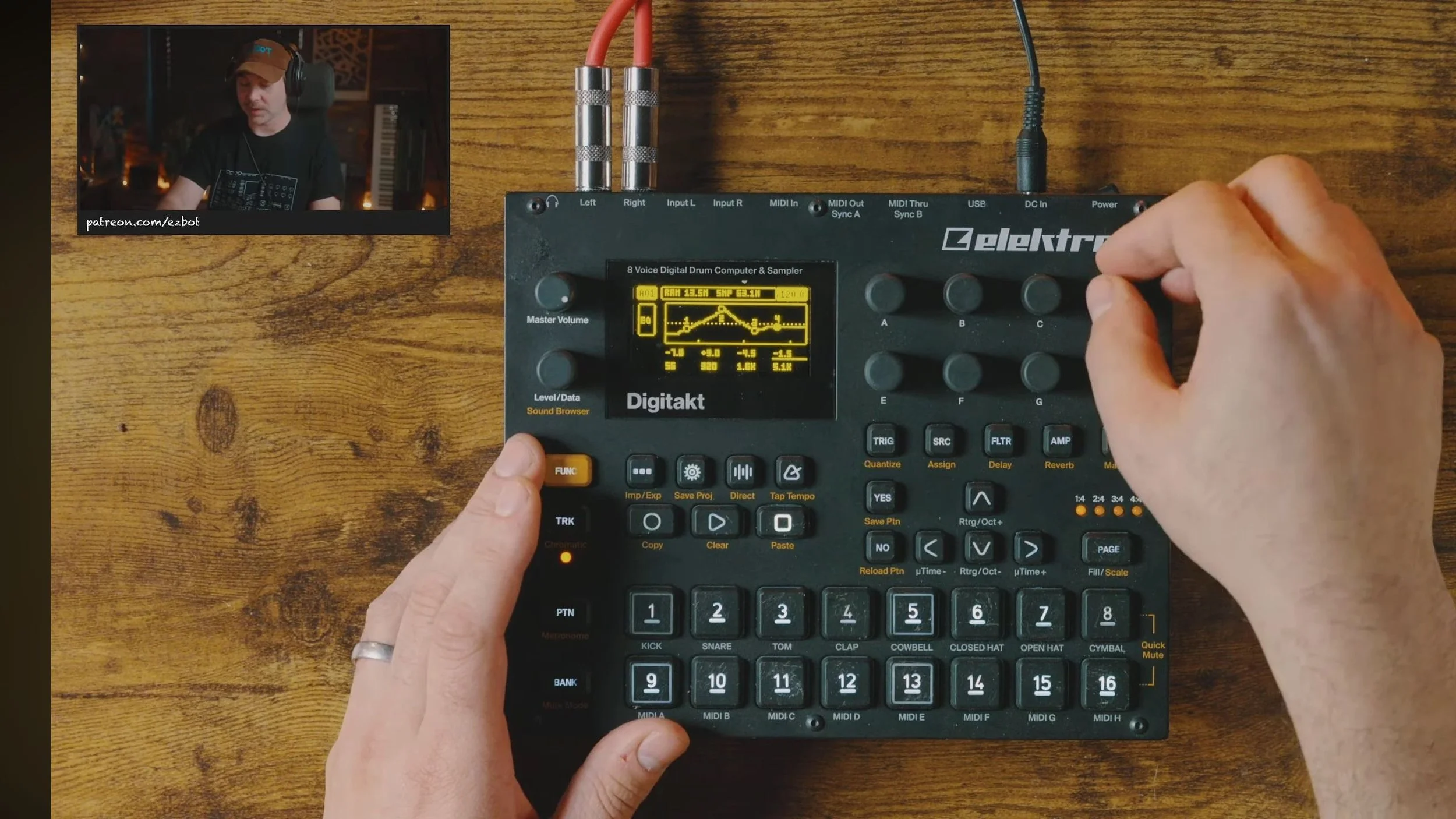
My understanding from Elektron was that they recognize this creativity while drawing boundaries around what they support. They specifically asked users not to run one instrument’s operating system on another, a concern brought into focus by demonstrations of Digitakt II capabilities on a Digitone II. They also described their instruments as distinct musical ideas, with different identities and workflows.
An important distinction from the call was the difference between demonstrating a feature and supporting it. Making something work in one situation is an achievement. Making it dependable alongside existing projects, connected equipment, and everything else the instrument does requires a different scale of testing.
The alternative firmware developers described their work as growing out of an appreciation for those instruments. Sam Banks, the creator of Octabam, wrote, “I started octabam because I love the Octatrack.” He had been using external Eventide effects and wanted to create effects inside the Octatrack that better suited his music. What began as a personal project grew into a collaborative community. His stated focus is now on developing stable, stage-ready firmware revisions.
Jannik began by contributing modules and helping standardize testing in Octabam before building Modwerk. Both Octabam and Modwerk offer web-based builders that let users choose modules and build their own custom firmware directly from a webpage, using their own copy of the instrument’s original OS file. His focus includes making modifications accessible, documenting them clearly, and connecting users’ problem reports directly with developers. As he put it, “The mods are meant to add to the machines we already love.”
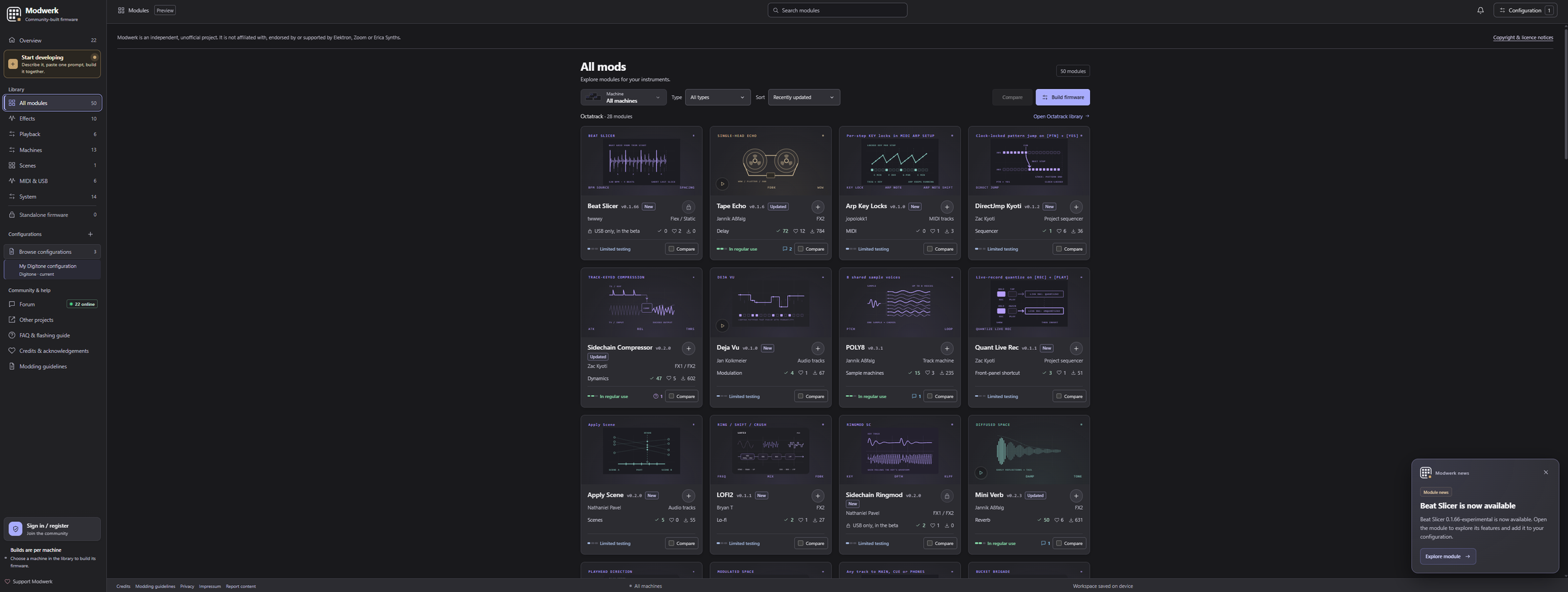
Community moderation is part of that work, too. Sam and Jannik described guidelines they enforce in their communities to keep discussion and development ethical. Jannik said Modwerk does not host or share Elektron’s firmware, and that he does not integrate modifications that clone products still on sale or that he believes would harm Elektron’s sales. He also described reviewing new modules before their first release.
Reliability matters just as much as the new capabilities. Jannik cautioned in his response that Modwerk’s modules could still crash and were not yet safe for live use. My own time with the modified Digitakt was limited, and enjoying it at home did not tell me whether I could depend on it for a performance.
Some users have raised a different concern: could reverse engineering, or RE, make hardware instruments feel more like laptops? For musicians who value a DAWless setup, part of the appeal is having a familiar instrument they can turn on and play. If choosing firmware, configuring modules, and troubleshooting become a bigger part of that experience, some of what brought them to hardware could be lost. That is a concern about how making music might feel, rather than a claim that every modification makes an instrument harder to use.
Some developers I’ve spoken with are excited about AI-assisted coding and reverse engineering. They plan to work alongside these developments and help shape the next wave of instruments. That opens up another possibility: hardware designed from the start to welcome experimentation, with an interface that still feels focused and playable. Whether that balance works will depend on the instruments themselves.
For hardware developers, the longer-term effects remain uncertain. Community development could extend an instrument’s useful life and renew interest in it. If modifications become practical substitutes for purchasing other instruments, they could also affect the revenue supporting development and maintenance. I do not have sales evidence establishing that this has happened.
I came into these conversations wanting to understand what the new possibilities meant for the people on either side of the instrument. The additions I tried were cool, and the work behind the original machines still matters. Can we make room for experimentation, respect the people building these instruments, and keep them dependable enough that making music stays the main event? That is the question I want to keep talking about.
Explore more
My Ultimate Sampler Synthesis Pack includes 450 single-cycle grids and over 500 wavetables. There is also a free Single Cycle Waveforms pack.
Explore my Hybrid 4X4 and Techno Performance Mixer V2 templates for the Octatrack. I have not tested these templates with unofficial firmware.
Find the Octatrack MKII: zZounds · Guitar Center · Perfect Circuit · Sweetwater · Thomann · EU
If you want help getting more out of the instruments you already own, book a one-on-one lesson. We can work on the musical ideas and performance skills that matter to you.
Help keep the music going
My YouTube channel and these articles are 100% supported by community donations and Patreon subscriptions. If you found something useful here, a tip helps me keep making and sharing this work. Thanks for being part of it.
Leave a tip on Ko-fi · Explore templates and exclusives on Patreon · Join the email list
Disclosure: I have longstanding personal and professional relationships with people at Elektron, and teaching their instruments and making templates are part of my livelihood. This article combines my understanding of the call and follow-up with Elektron, my hands-on impressions, and written responses from Sam Banks and Jannik. Statements about the community projects’ development and policies are attributed to their developers. My account is not an official Elektron statement or a promise of support for unofficial firmware. Elektron’s public statement is reproduced separately below. The retailer links are affiliate links. If you buy through them, I may earn a commission at no extra cost to you. The sample packs and performance templates linked above are my own products.
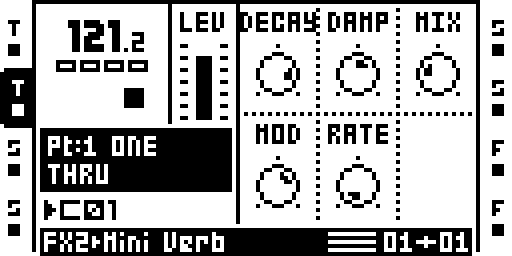
Image sources: Miniverb interface from Sam Banks / Octabam documentation; Modwerk module-library screenshot supplied by Matthew Piecora. Project and instrument interfaces belong to their respective creators.
Elektron’s official statement
The following statement is reproduced from Elektron’s official account on Elektronauts. Read the original statement on Elektronauts.
We wanted to contribute to the discussion around hacking that has developed here on Elektronauts and other forums in recent weeks.
Firstly, we very much understand the excitement around exploring firmware and hardware and modding instruments. That spirit of curiosity and experimentation is, after all, a pretty important part of our own early story here at Elektron.
But importantly, as many of you have already mentioned, Elektronauts isn’t the place to be sharing hacks, or facilitating or promoting the modification of firmware on currently supported machines or those from preceding generations. That includes sharing, requesting, or directing people to the files, tools, repositories, or instructions needed to do so. We would always warn against modifications to our firmware and/or machines that could brick them (potentially rendering them unusable), prevent future updates, affect warranty coverage, and in some cases raise concerns around Elektron’s intellectual property. Something that looks like a simple change in isolation can lead to major problems elsewhere, particularly when a later official OS arrives, and can confuse users about which features are officially available on our machines.
For this reason, we’ll be removing topics or comments that we consider to cross that line, including in relation to gear from other manufacturers. The same applies to our official social platforms.
This policy also covers all legacy machines. We also need to protect Elektron’s intellectual property, and therefore do not permit the development or distribution of firmware or hardware that makes unauthorized use of it, for profit or otherwise.
General discussion around the topic is one thing, and not something we seek to inhibit, but we draw the line at distributing actionable material or actively encouraging people to install modifications that could damage their machines.
Curiosity is understandable. Bricked boxes - as we are sure people will understand - less so.
If anything here requires further clarification, please contact our Support team directly.