
By Matthew Piecora, AKA, EZBOT
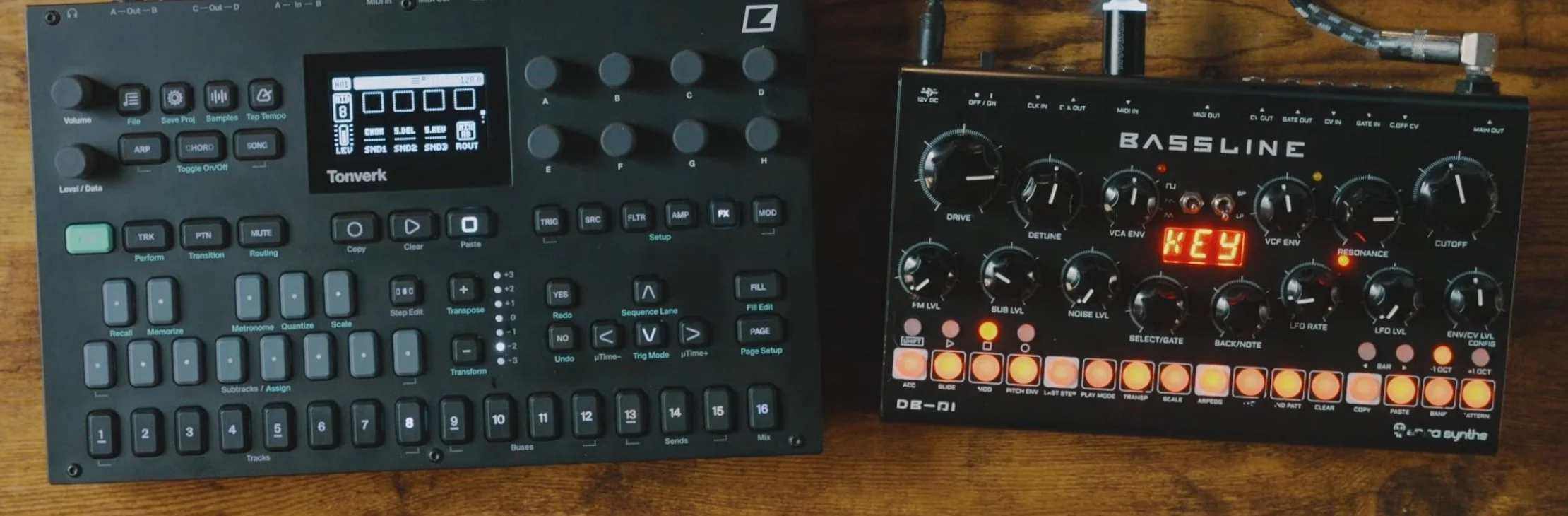
I have the most fun with Tonverk when I put another instrument next to it. Give me a synth with a sound I love and some knobs to turn, then let Tonverk handle the sequencing, effects, and sampling. That is the setup that keeps me making music.
For this session I paired it with the Erica Synths DB-01, a bass synth I have owned since it came out. I went in thinking about tiny, detailed sounds and ended up with heavy bass, a punchy kick and snare, and something much closer to the industrial music I love. The DB-01 had other plans, and I was happy to follow them.
Recorded September 1, 2026, using Tonverk OS 1.40.
A synth I still want to reach for
The DB-01 can get grizzly and destructive in a way I really like. It’s not a 303 clone or anything of that nature despite it’s name and implication as a small bass focused mono synth. It has its own character, and having the filter, envelopes, and drive right there makes it easy to change the sound while a pattern keeps playing.
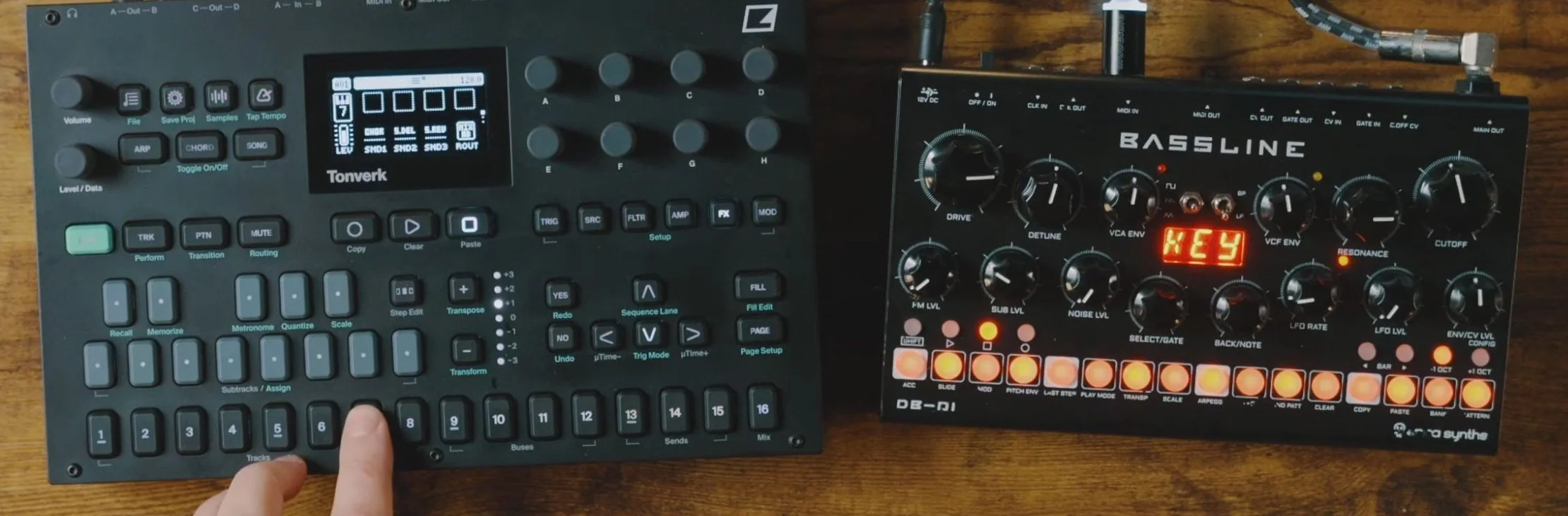
Tonverk gives that sound somewhere to go. In this setup, track 8 sequences the DB-01 over MIDI and processes the returning audio. I can build a pattern on Tonverk, turn the synth's knobs, and work with insert and send effects without treating the external instrument as a separate recording job. You can see that routing in action around 6:24 in the replay.
That is a big part of the appeal for me. The bass still feels like an instrument I am playing, even while Tonverk is doing a lot of work around it.
The effects changed the music
A short bass phrase can do a lot when its sound keeps moving. Delay adds another rhythm, reverb changes how long a note seems to hang around, and filtering or folding can push the same part into a completely different mood. The sidechained bus gave this session the pumping movement I wanted.
I started out calling Supervoid my favorite reverb, then switched to Steelbox and changed my mind. Steelbox sounded so good on this material. That is more useful to me than picking a favorite effect in isolation: I want to hear what it does to the part I am actually writing.
The drums did not need to become complicated to keep up. A solid kick and snare left space for the bass and processing to carry the detail. Later, shortening the DB-01's envelopes and playing it through an arpeggio brought out these almost guitar-like plucks. It is cool how far that one voice can move without changing instruments.
I also brought in a wavetable sound from my own pack. If you want to explore that side of sampler synthesis, my Ultimate Sampler Synthesis Pack includes single-cycle waveforms, sample chains, wavetables, and noise bursts. The main idea here still works with the sounds you already have.
Keep a patch, or keep a performance
Before the stream, I made a multisample of the DB-01. That gave me a playable version of a patch inside Tonverk, including the option to play chords from a synth that is normally monophonic. You can hear the comparison from 3:07.
You can download the DB-01 multisample from this session for free on my Patreon. Look for the attachment titled “DB-01 DIRTY BASS” in the post.
More voices did not automatically make that particular sound better. It was a dirty patch, and I preferred what it did as a bass. Multisampling is useful because it lets me keep and reuse a sound. It does not mean every mono patch suddenly wants to become a pad.
By the end, I had a different problem. I liked the processed bass phrase and did not want to depend on recreating all of it next time. The synth, the effects, and the pumping bus had become one part. For that, I needed to record the phrase as I was hearing it.
Record the bus, not just the input
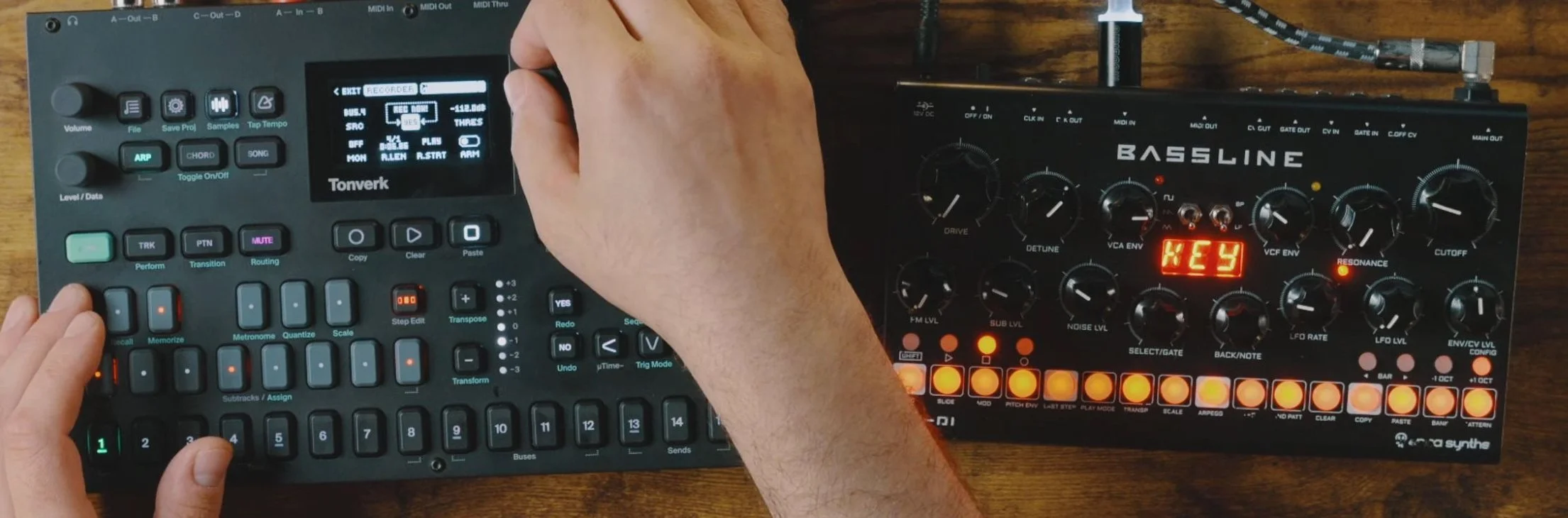
My first recording took the audio from track 8, which missed the bus processing I wanted to keep. Selecting Bus 4 as the recording source captured the effects and sidechain movement as well. That was the important correction. The recording source determines which part of the signal path you are actually saving.
I recorded four bars, saved the sample, and loaded it into Single Player in place of the live part. Then I turned off processing that was already printed into the recording. Sending it through the same effects again was not the sound I had just captured. A little filtering helped tidy the bass, and I had a part I could return to without needing the external synth connected.
Try it with one phrase. Sequence a synth from Tonverk, bring its audio back in, and shape it through an effects bus. When you have a short section you like, use that bus as the recorder source and make a quantized recording of a complete phrase. Load the result on a sample track, mute the live version, and listen in the pattern. Remove any processing that is being applied twice. Save a copy of the project first so you can return to the live setup.
The full recording and correction are at 2:27:27, with the switch to Bus 4 at 2:29:28. A multisample preserves a playable patch; this recording preserves the phrase and its processing. I want both options.
This is where Tonverk makes sense to me
I do not always connect with Tonverk immediately. Some days I bounce off it. Pairing it with a synth I already love gave me a way in, and this turned into one of the most fun sessions I have had with it.
The music came out differently from what I tend to make on Digitakt or Digitone. I could follow the DB-01's sound, get pretty far into the effects, then save the part before moving on. That is why I like Tonverk with friends: I get to keep playing the hardware, and I can keep the results too.
If you want help building a setup like this around your own gear, book a one-on-one lesson. You can find my templates and sound packs on Patreon, or join the email list for new projects and sessions.
The instruments in this session
Elektron Tonverk
zZounds / Guitar Center / Perfect Circuit / Sweetwater / Thomann · EU
Erica Synths Bassline DB-01
Guitar Center / Sweetwater / Perfect Circuit / Thomann · EU
Check each retailer for current availability, delivery options, and pricing.


